
Research Library
Research shapes how I think, but rarely by providing simple answers. This library is a collection of studies and articles that have caught my attention, challenged an assumption, clarified a question, or changed something about how I approach my clinical work.
For each, I’ve included a brief look at what the research suggests, why I find it interesting, how it connects to my clinical thinking, and—just as importantly—what I don’t think the research allows us to conclude.
This isn’t intended to be a comprehensive review of the literature. It’s an evolving record of what I’m reading, what I’m questioning, and how research becomes part of the way I think about people and therapy.
Interventions for Adults With a History of Complex Traumatic Events: The INCiTE Mixed-Methods Systematic Review
Melton et al. (2020)
This large systematic review examined psychological and pharmacological treatments for adults with histories of complex traumatic experiences. Across more than 100 treatment studies, psychological interventions reduced not only PTSD symptoms but also depression and anxiety, although results varied by treatment type, population, and outcome and the overall quality of evidence was limited. NCBI
Why it matters to my work: I’m interested in whether treating trauma changes difficulties that sit outside the conventional PTSD symptom cluster. If depression, anxiety, emotional dysregulation, or interpersonal difficulties also shift during trauma treatment, that gives us useful information about how apparently separate problems may be connected.
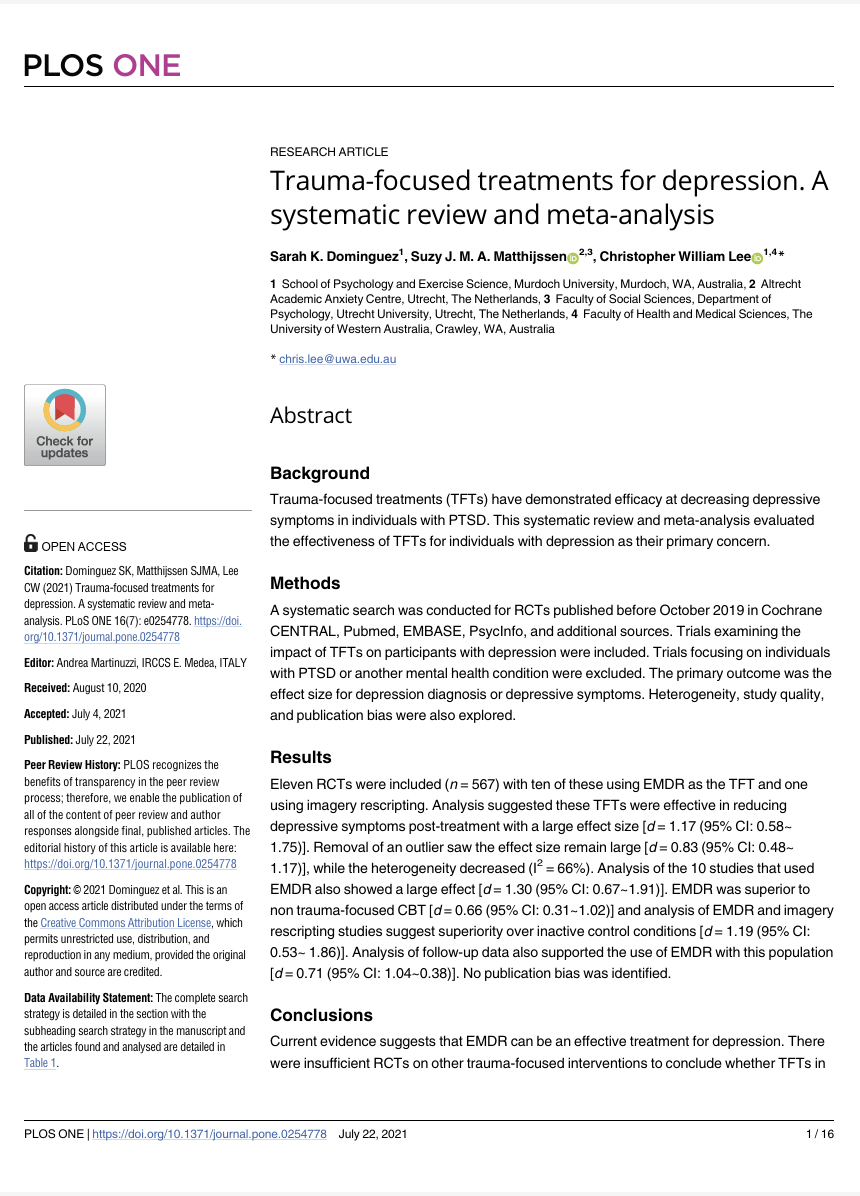
Trauma-Focused Treatments for Depression: A Systematic Review and Meta-Analysis
Dominguez, Matthijssen, & Lee (2021)
This systematic review and meta-analysis asks whether treatments targeting distressing or traumatic memories can reduce depression when depression—not PTSD—is the primary presenting concern. Across 11 randomized controlled trials, trauma-focused treatment was associated with substantial reductions in depressive symptoms, although nearly all of the evidence came from studies of EMDR.
Why it matters to my work: I’m interested in whether some symptoms we treat as primary problems may sometimes be downstream from processes maintaining them. If directly working with distressing past experiences changes depression, that gives us another way to think about what may be organizing the depressive symptoms in some people.
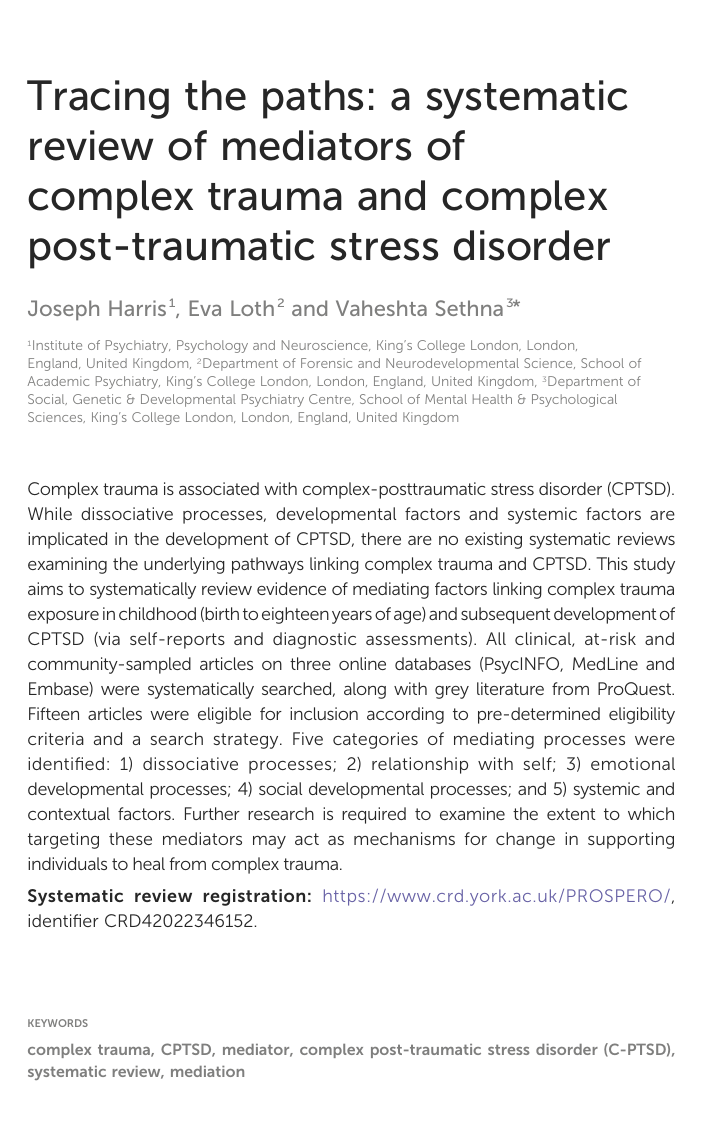
Tracing the paths: A systematic review of mediators of complex trauma and complex post-traumatic stress disorder
Harris, Loth, & Sethna (2024)
This systematic review asks what may happen between childhood complex trauma and the later development of complex PTSD. Across 15 studies, the authors identified potential pathways involving dissociation, relationship with self, emotional and social development, and the broader context in which trauma occurs.
Why it matters to my work: I’m interested in what trauma may change or organize over time—not simply whether a traumatic experience occurred. This research begins to map some of the processes through which earlier experiences may continue to shape present functioning.
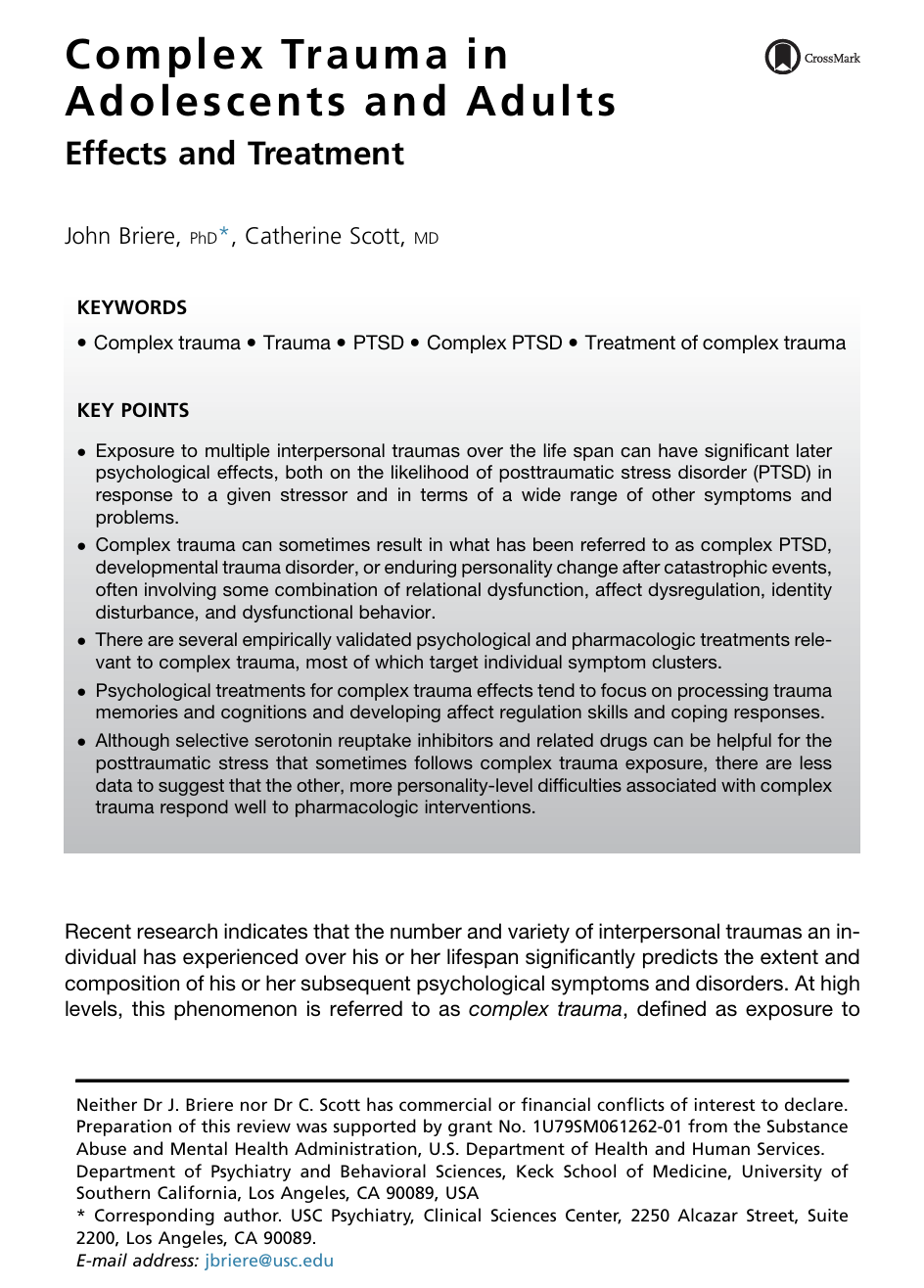
Complex Trauma in Adolescents and Adults: Effects and Treatment
Briere & Scott (2015)
Complex trauma involves exposure to multiple, often prolonged traumatic experiences over time. This review examines how cumulative trauma may contribute not only to PTSD, but to a broader pattern of difficulties involving emotion regulation, relationships, identity, dissociation, and behavior—and why those different effects may require different treatment approaches.
Why it matters to my work: I’m interested in trauma not only as something that happened, but in the patterns a person may have developed in order to survive, adapt to, or make sense of what happened. This article gives me a useful framework for thinking about how repeated trauma may shape multiple areas of functioning without assuming that every difficulty is simply another symptom of PTSD.
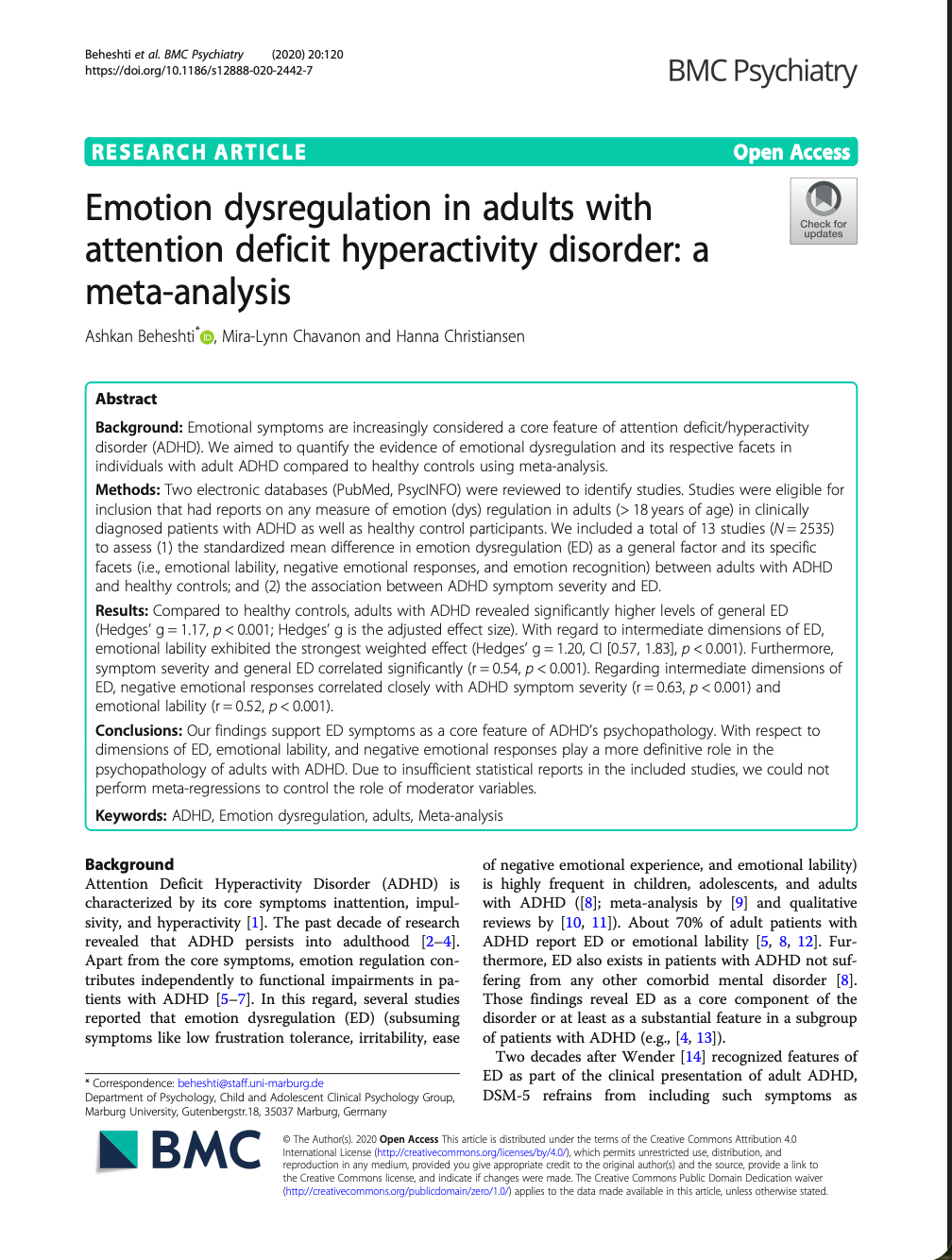
Emotion Dysregulation in Adults With ADHD: A Meta-Analysis
Beheshti et al. (2020)
This meta-analysis examines emotional dysregulation in adults with ADHD, finding substantially greater difficulties with emotional regulation than among adults without ADHD—particularly emotional lability. It adds to evidence that the lived experience of ADHD extends considerably beyond attention and hyperactivity.
Why it matters to my work: I’m interested in what changes clinically when emotional dysregulation is considered as part of the ADHD formulation rather than automatically explained as a separate mood or anxiety problem.
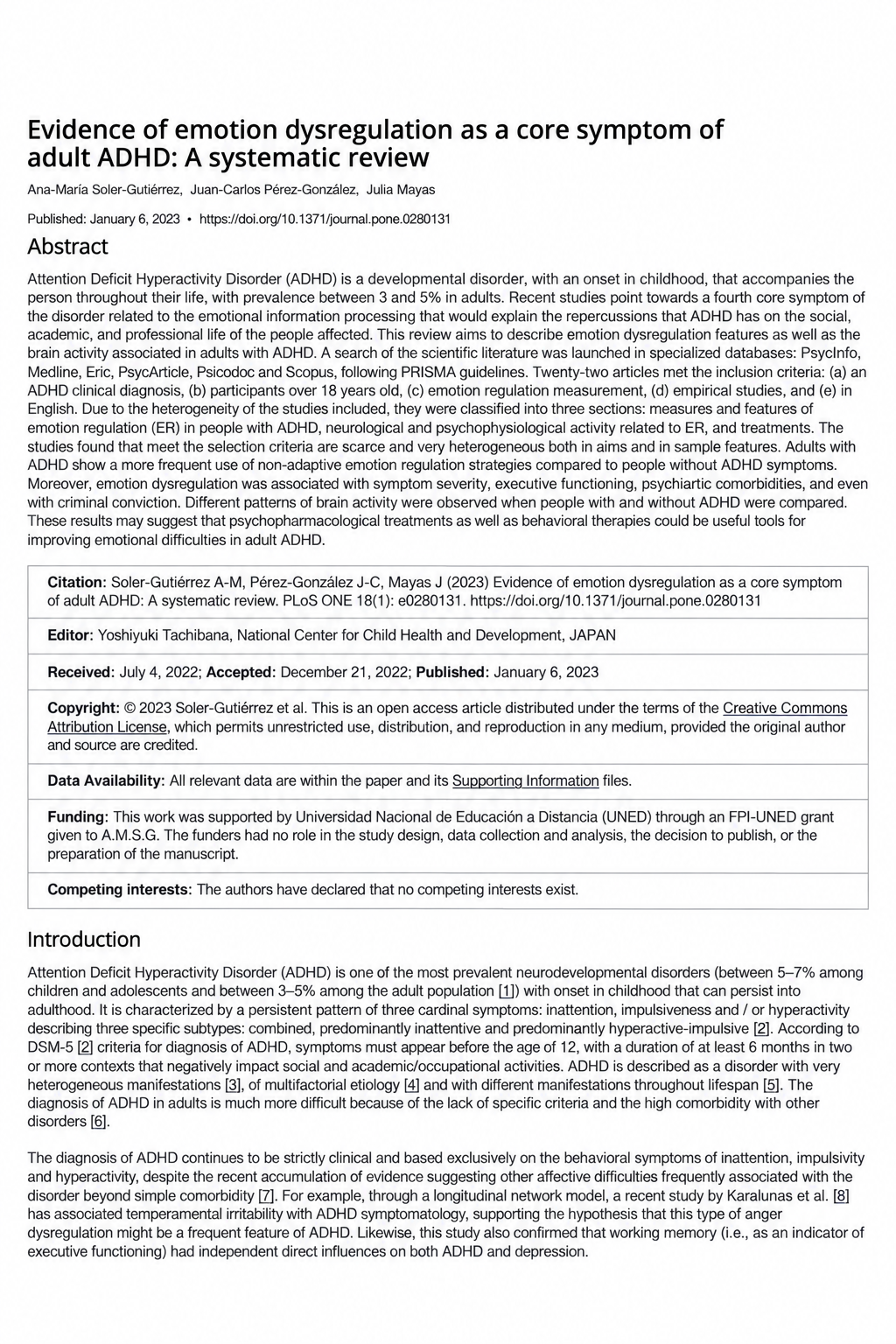
Evidence of emotion dysregulation as a core symptom of adult ADHD: A systematic review
Soler-Gutiérrez, Pérez-González & Mayas (2023) · PLOS ONE · DOI: 10.1371/journal.pone.0280131
This systematic review asks whether difficulty regulating emotion is simply something that frequently occurs alongside ADHD or may actually be a more central part of ADHD itself. Across the research, adults with ADHD consistently showed greater difficulty understanding and regulating their emotional responses.
Why it matters to my work: It connects directly to my interest in figuring out what is underneath an emotional experience rather than assuming that emotional intensity automatically means a separate mood or anxiety disorder.
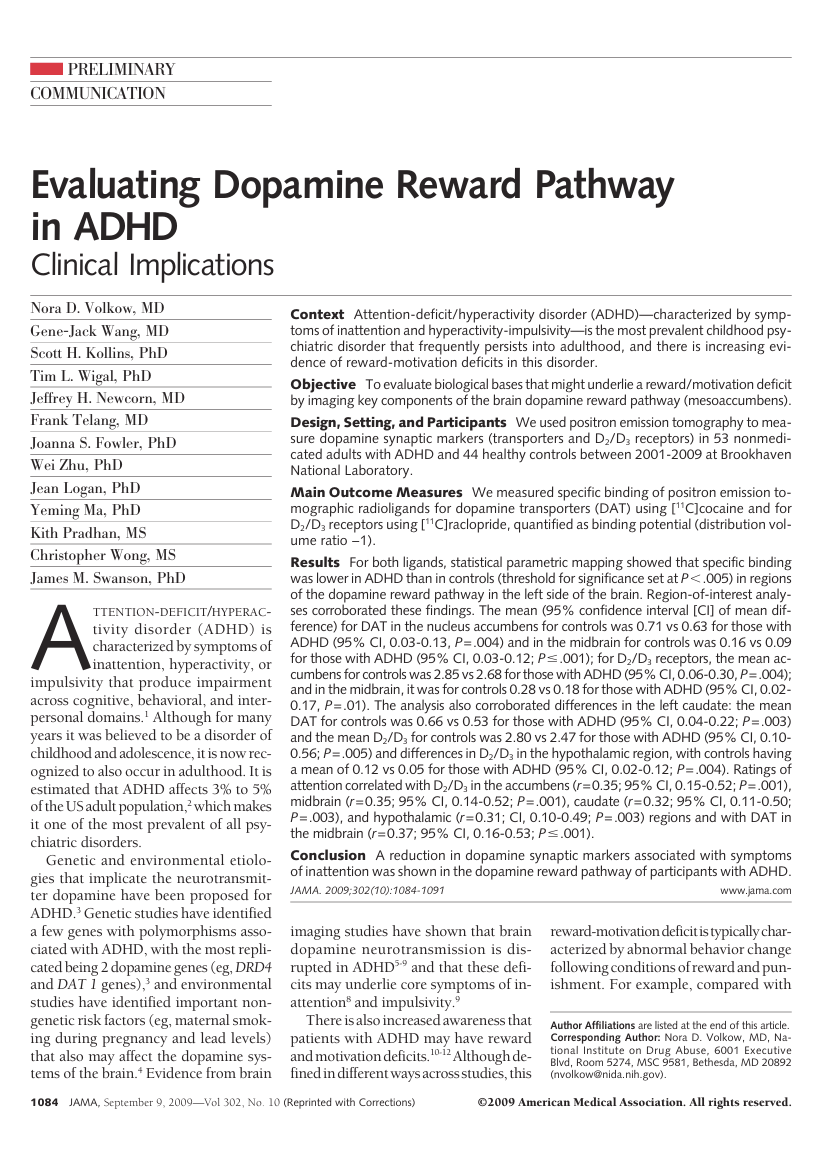
Evaluating dopamine reward pathway in ADHD: Clinical implications
Volkow et al. (2009) · JAMA · DOI: 10.1001/jama.2009.1308
Using brain imaging, this study found differences in parts of the dopamine reward system in adults with ADHD, particularly in areas involved in motivation and reward. It offers one biological window into why knowing that something matters and being able to make yourself act on it aren't necessarily the same thing.
Why it matters to my work: I’m interested in moving ADHD treatment away from explanations based on effort or willpower and toward understanding what influences activation, motivation, attention, and reward.